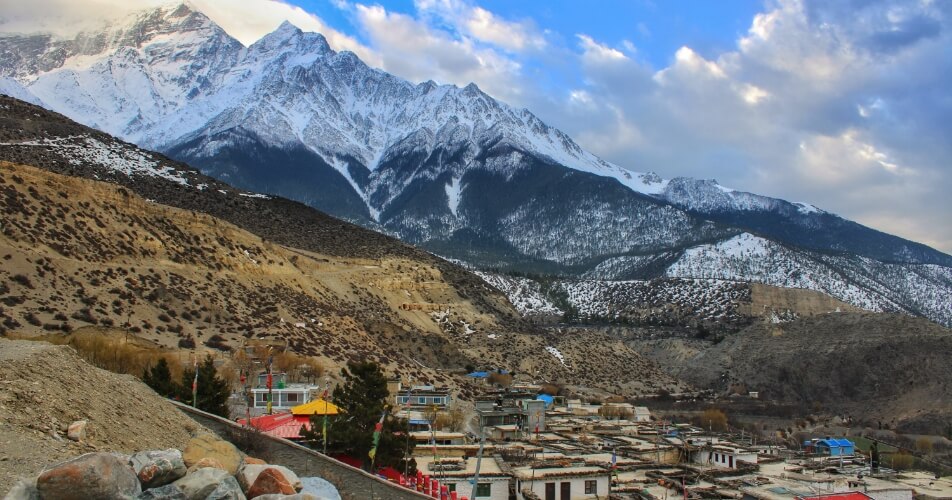
Manaslu with Tsum Valley Trek | 22 days
- Explore the mystical Tsum Valley
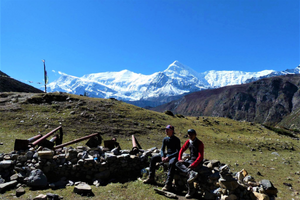
- View of the Tibetan plateau from the Rui La Pass
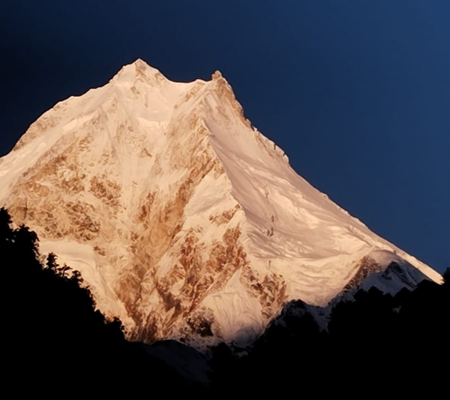
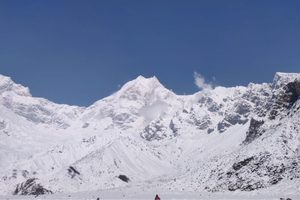
- Majestic view of Manaslu (8,163 m)
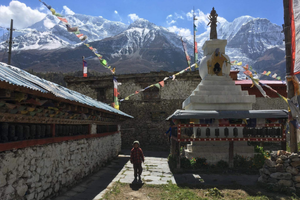
During this impressive trek, you traverse the enchanting Tsum Valley, a hidden gem in northern Nepal that was cut off from the outside world for centuries. Here, you walk past ancient Buddhist monasteries, colorful prayer flags, and mani walls that remind you of the deep spiritual significance of this region. From the quiet villages in Tsum, you embark on an adventurous journey to the Ganesh Himal base camp, a place far from civilization where pristine nature surrounds you.
The absolute icing on the cake is the view from the Rui La Pass on the border with Tibet. From here, you look out over the vast Tibetan plateau and feel the proximity of another world. But the trek truly ends with a bang when you arrive in the Manaslu Valley: tropical forests give way to glaciers and you come face to face with Manaslu (8,163 m), the eighth highest mountain in the world.
Along the way, you cross wobbly suspension bridges, pass roaring rivers, and visit mountain villages where time seems to stand still. This is a journey for those seeking tranquility, a challenge, and a deep connection with both culture and nature.
The Tsum Valley is one of the most remote and culturally intact areas of Nepal. Until 2008, this region was closed to foreigners, which has resulted in Buddhist traditions and authentic village life being exceptionally well preserved. You hike past centuries-old monasteries such as Mu Gompa and Rachen Gompa, through serene valleys surrounded by impressive peaks. The tranquility, spirituality, and hospitality of the local people make this one of the most special places in the Himalayas.

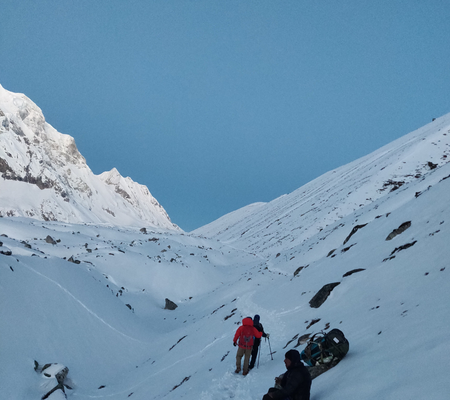
One of the most unique moments during this trek is the ascent of the Rui La, a high pass on the border with Tibet. Here, a breathtaking panorama unfolds over the vast Tibetan landscape. You stand at a place where few hikers ever come, with an unfiltered view of a world that remains a mystery to many. The view and the symbolic proximity of Tibet make this a moving highlight.

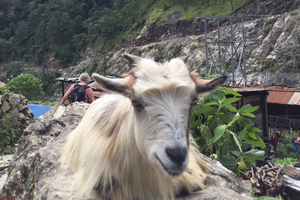
From the heart of the Tsum Valley, you take an adventurous detour to the remote base camp of the Ganesh Himal. The route is pure and pristine: steep paths, silent forests, glacial rivers, and perhaps even a view of blue sheep or Himalayan hair. The reward is a panoramic view of the mighty peaks of the Ganesh Himal range. Here, you truly feel how insignificant and alive you are amidst nature.

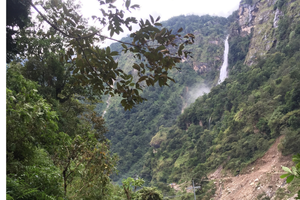
After the tranquility of Tsum, the second part of the trek takes you to the impressive Manaslu region. You follow ancient trade routes past suspension bridges, waterfalls, and tropical-looking forests, towards the icy world of Manaslu. The view of this eight-thousand-meter peak is nothing short of spectacular – especially at sunrise when the mountain turns golden. This part of the trek is physically more demanding, but the nature and the views make it absolutely worthwhile.

A journey to the heart of the Himalayas, far off the beaten track.
The Manaslu with Tsum Valley Trek is a unique combination of culture, nature, and adventure. You traverse the isolated and spiritual Tsum Valley, where centuries-old Buddhist traditions are still very much alive, and continue hiking along steep valleys and tropical forests to the impressive Manaslu Massif. Along the way, you enjoy panoramic views of eight-thousand-meter peaks such as Manaslu and the Ganesh Himal, visit remote monasteries, and cross high passes with views of the Tibetan Plateau. This trek offers not only stunning nature but also a profound cultural experience that will stay with you for a long time.
Today you drive west along the highway between Kathmandu and Pokhara. You turn towards the village of Dhading and continue driving past small villages, green terraced fields, and wooded slopes. The road turns into a bumpy, unpaved track as you pass Arughat. From here, you also begin to get a clear view of the mountains: the Annapurna, the Ganesh Himal, the Langtang Himal, and of course, the Manaslu! Towards evening, you arrive in Soti Khola, situated on the banks of the Budhi Gandaki River.


After breakfast in Soti Khola, you start your trek. The landscape today is already very varied: you hike up and down through forests, past rice fields, rocky ridges, raging rivers, and cascading waterfalls. Today, you first cross a bridge and walk through a dense forest. Afterwards, you climb a mountain ridge above the wild Budhi Gandaki River. Did you know that this river is connected to the Tibetan Plateau? Via a rocky path, you reach Khursane. You follow a very adventurous trail where you walk past two waterfalls on a steep path along the side of a cliff. You descend further along the rice fields until you arrive in the Gurung village of Labubesi. Here, you climb along rocks into the valley; the river flows somewhat calmer here, and the valley becomes wider. You descend to the riverbanks and then walk along a side ridge. You continue walking towards the river and cross one last suspension bridge before arriving in Machha Khola.


After breakfast, you start your hike. You first follow the gorge and walk upstream alongside the river. The path starts narrow and goes up and down. Eventually, you cross the Thora Khola River and reach Khorlabesi. A little further on, you arrive in Tatopani, where there is a natural hot spring. Take a short break here! You climb up a ridge and cross the Budhi Gandaki River via a suspension bridge. You climb a staircase over a ridge to Dobhan. Here you enter the Manaslu Conservation Area! Afterwards, you cross another suspension bridge, this time over the Yaru Khola River. You climb a stone path again and then descend back to the river. Next, you climb the stone steps to Tharo Bharyang. This is the habitat of the Langur monkeys, so look up into the trees and you will undoubtedly see them hanging around. You continue your path along the western bank of the Budhi Gandaki River. You climb over a mountain ridge and continue along the river. Finally, you make one last climb and arrive in the village of Jagat. Jagat is a picturesque village with small cobblestone streets.


Today you will walk across several suspension bridges! You will hike leisurely uphill past beautiful waterfalls. You will pass the village of Philim, situated in a beautiful, expansive landscape. From there, you climb back up along the path, which branches off towards the Tsum Valley. The imposing Ganesh Himal and Shringi Himal reveal themselves along the way. We end our day today in Lokpa, which lies above the path and is surrounded by barley fields.


You walk along the river for about an hour until you reach a fork in the river. You take the left path and cross the suspension bridge. Here you enter the Tsum Valley. You will cross two more suspension bridges today. On a clear day, you can see the snow-capped peaks of Baudha Himal (6,672m) and Ganesh Himal VI. The path runs through a gorge with tall pine trees and green grasslands along the mountainside. After a final steep climb, you arrive in Chumling. Chumling is also known as ‘Lower Tsum’. You can enjoy the beautiful surroundings here for the rest of the day. You can also visit a few small monasteries here.


We continue our journey through the valley to Dumje, where we stop for lunch. To the southeast, a path offers a spectacular view of the peaks Baudha and Himalchuli. Chhokangparo is part of Upper Tsum. This village is situated on a plain and consists of the settlements of Chhekam and Paro.


You walk past the village of Lamagaon. Afterwards, you climb further up to the Milarepa Cave. You continue walking and cross the Shiar River. You pass the villages of Phurbe, Pangdun, and Chhule. After this last village, you walk uphill along the river and cross a bridge, after which you arrive in Nile.


We are now not far from the border with Tibet. Today we continue on to Mu, passing through beautiful landscapes that give you the feeling of being in Tibet. You walk along the western side of the valley and then climb to the most remote part of the valley, Mu. You will spend the night in Mu. Mu Gompa is situated on the top of a spur. The surroundings are breathtaking, with views of the snow-capped peaks. The monastery is very isolated; the nearest settlement is a few hours’ walk away. If you still have plenty of energy left and would like to walk a bit more, you can hike today (approximately 2 to 3 hours) to the Dephyudonma Gompa. This monastery is one of the oldest in the region and of great importance to Buddhism. Afterwards, you walk back to Mu.


You return through the valley to Chhule and continue on to Phurbe. You walk along the eastern bank of the Siyar Khola River and cross the boulder-covered plains to Rachen Gompa (3240m). Thanks to this nunnery, the girls from this area can also receive an education. The monastery is located in the Shiar Valley, in the rugged mountains between Tibet and Nepal. Did you know, by the way, that in the Tsum region, every family has at least one relative who is a nun or a monk?


You walk across a bridge and descend to Gho (2485m). You walk past a small white gompa and then cross a wooden bridge. You pass Dhumje (2460m) and continue following the path upwards. After a steep climb through pine and rhododendron forests, you walk to a beautiful mani wall with prayer flags. You follow it further uphill and, via a zigzag climb through a forest of silver pines, arrive at Gumba Lungdang (3200m). About 40 nuns live in this monastery. The view of the mountains from this location is breathtaking.


Today you follow a less-traveled path. Walking can be more difficult due to the altitude, but the dense forests and amazing views make up for it. You walk through rhododendron forests and pine trees again. Occasionally, you cross the river on a wooden bridge. It takes about 4 hours to reach Ganesh Himal Base Camp (4200m). You return to Gumba Lungdang in time for the evening puja (prayer ceremony).


You start early today and begin with a descent to Dumje. You cross a bridge and walk through a beautiful forest. Before arriving in Ripchet (2240m), you cross several deep gorges via new bridges. In this high-altitude, fertile valley, barley and buckwheat are cultivated, and chortens stand in the fields, surrounded by pine trees.


Today you leave the magical Tsum Valley with its incredibly hospitable people. After crossing the Budi Ghandaki River, you take a final look at the Tsum Valley, which you are leaving today. You follow the path through a narrow gorge; the path goes up and down. You cross the river a few times via a suspension bridge to Sirdibas (1860m). You walk through bamboo forests to Deng (1800m), which is inhabited by the Buddhist Gurung people.


After breakfast, you cross the Budhi Gandaki River and climb to the bridge. You continue climbing until you join the path to Bhi. You walk west along the valley through dense forests with diverse vegetation. You pass several picturesque villages where indigenous communities live. In the distance, you catch a glimpse of the snow-capped peaks of the Himalayas. You walk through the village of Prok, a beautiful location to take a break, with a view of the snow-capped peak of the Siringi Himal. Today, you cross the Budhi Gandaki River several times. You also come across a number of beautiful Buddhist gompas. The path continues through a dense forest alongside the river until you reach a narrow gorge. You climb steeply one last time until you arrive in Namrung. It was a beautiful hiking day today, where you could fully enjoy the natural beauty that the Manaslu Conservation Area has to offer.


From Namrung, you can still enjoy a beautiful view of the Ganesh Himal, the Siring, and the Himal Chuli to the south. You climb slowly at first, walking through the forests to the village of Lihi. After admiring the authentic stupas here, you descend along the path through a side valley of the Simnang Himal. You gradually ascend above the tree line, and the landscape changes from lush green to brown and grey hues that contrast beautifully with the blue sky. You pass several villages. First, you walk through Sho, then through the village of Lho. In picturesque Lho, you have a magnificent view of the Manaslu and can explore the famous Ribung Gompa at the top of the hill. The next village you encounter today is the equally authentic Shyala, and the view there is spectacular! To the left, you see high mountains including the Himal Chuli and the Ngadi Chuli; to the right, other peaks including the Ganesh Himal; and looking straight ahead, there is the impressive Manaslu and large glaciers. After you have enjoyed this breathtaking view, you climb further to Sama Gaon.


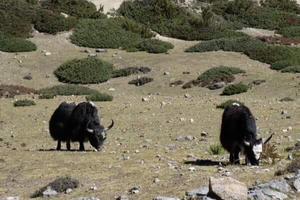
Today you have an extra day at the same location. You can choose to take it easy and rest in Sama Gaon, or go for a beautiful day hike. A day hike to the Manaslu Base Camp (4800m) is highly recommended. It takes about 5 hours to hike to the base camp and about 3 hours down. The Manaslu Base Camp is the first in a series of camps used for climbing expeditions to the summit of Manaslu. During the climbing season, the base camp is packed with tents, equipment, guides, porters, and expedition members who are either worried about the climb or exhausted after a ascent. Did you know, by the way, that at 8,163 meters above sea level, Manaslu is the eighth highest mountain in the world! An alternative day hike takes you to the ancient Pungyen Gompa (4070m). From here, you have a magnificent view of Manaslu and the surrounding area. Definitely worth the effort! The day trip departs along a side path of the trail between Shyala and Samagaon. From the start of the side path, after about an hour, you reach green meadows where yaks graze. After walking for another hour and a half, you reach the Gompa. It is situated at the end of a vast grassy plateau surrounded by a dramatic mountain landscape. The Gompa has a small prayer hall and several dormitories for the monks built into the mountain.


Once again, an easy and short trekking day, giving you plenty of time to acclimatize to the altitude. You hike to the ice-covered Birendra Tal lake (3450m) near the Manaslu Glacier. It is a peaceful walk through meadows with grazing yaks. You walk through a wide valley along long mani walls. Once you reach the tree line, you see only juniper bushes. You climb to a mountain ridge and descend again to the Budi Gandaki River, which you cross via a wooden bridge. A little further on, you ascend again until you arrive in the village of Samdo. This picturesque village is a true yak village: there are more yaks than people here. After lunch, you can take a beautiful hike to a side valley and to the summit of Samdo Peak. Be sure to bring a jacket against the cold wind, as there is often a cold wind in the afternoon.


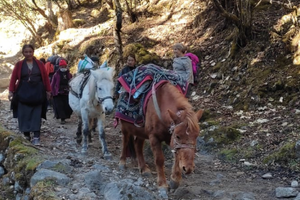
Today you have an acclimatization day in Samdo. A hike to Rui La is a great day trip that will help you acclimatize further. Rui La is a mountain pass at 4,998 meters and lies on the border between Tibet and Nepal. This route is a frequently used and centuries-old route to Tibet. From Samdo, it takes about five hours to reach Rui La. You hike north and follow the Athahra Saya Khola River. You follow the river until it turns west and the path leads uphill towards the east. Along the way, you enjoy beautiful mountain scenery and pass colorful yak caravans coming from Tibet with fresh goods.


You leave Samdo and follow a wide path that descends to the narrow Budhi Gandaki at 3850m. You pass the path leading to Tibet and continue walking. In spring, you can see marmots; in November, they are hidden for their hibernation. You cross two ravines along a narrow path and continue walking until you reach Dharmasala. In the past, merchants from Namche Bazar on their way to Tibet passed through this area to trade, and perhaps some of the scattered stone shelters you pass are a reminder of this past. Nowadays, there is no longer a market in Dharmasala. Dharmasala (4480 m) is now a seasonal village. The view is amazing. A large flock of blue sheep walks on the pollen-covered hills. Snow leopards live in this region; if you are lucky, you might find some footprints in the snow. The animals themselves are very shy, so the chance of seeing one is very small.
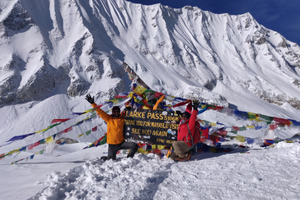
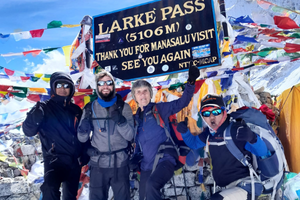
You depart very early in the morning to avoid the heavy mountain winds that start in the afternoon and are so strong by midday that they are dangerous. From Dharmasala, it is a difficult and strenuous climb to the glacial lakes just before the Larkya La pass. The beautiful view from the pass makes the climb well worth the effort. You have views of the Himlung Himal, Kangurru, and Annapurna II. After crossing the pass, you continue at high altitude until the path drops rapidly for a steep descent to the plain of Bhimtang.
You begin the final day of your trek south by crossing the Bhimthang Glacier. Afterwards, you walk along a ridge in a beautiful forest. In spring, the various shades of the rhododendrons are breathtakingly beautiful! The colors contrast beautifully with the large pine trees, and the view alternates with stunning vistas of Manaslu. You descend steeply to the bank of the Dudh Khola and pass the Hompuk stronghold (3420m) in a clearing in the forest. Next, you walk along the river to Karche (2700m). You then climb over a ridge to Gho (2560m), the first real village you encounter since Samdo. The valley becomes more rural, and you walk past various fields and forests to Tilije (2300m). After crossing the Dudh Khola river again, you descend steeply through bushes to the Marsyangdi valley. Afterwards, you cross the river again at Thonje (1900 m), ascend, and cross the Marsyangdi Khola via a long suspension bridge. A little further on, you arrive at Dharapani (1860 m).


The end of the journey has arrived. Together with your guide and porter, you will travel to Kathmandu in a private jeep. This adventurous ride takes the entire day, so you will not arrive in Kathmandu until late afternoon or evening.


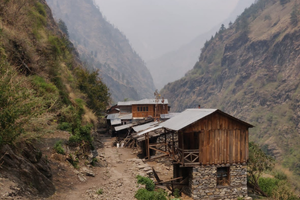
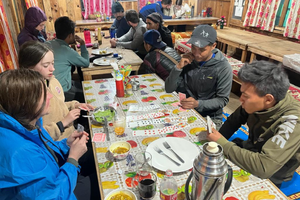
During this trek, you will stay overnight in simple, local lodges (also known as teahouses) run by families from the region. Do not expect luxury, but do expect a warm welcome, home-cooked meals, and the chance to experience daily life up close. The rooms are usually basic: wooden walls, a simple bed with a thin mattress, and a blanket. A good sleeping bag of your own is therefore a must for extra warmth and comfort.
Bathrooms are often shared and rarely feature a Western-style shower. Sometimes, you can get a bucket of warm water to wash for a fee. In the lower-lying villages, there is usually electricity (solar energy), but higher up, this is less reliable. Charging devices is often possible for a small fee. Wi-Fi is limited to a few villages and is often slow, so it is a good idea to buy a Nepalese SIM card with data in advance if you want to stay connected.
Compared to more touristy routes in Nepal, the facilities here are simpler, but that actually contributes to the charm and authenticity of this special trek. Moreover, by staying here, you directly support the local community.
The price for this Manaslu and Tsum Valley trek is:
Adults: from € (to be confirmed) per person, based on two participants
The Manaslu with Tsum Valley Trek is a unique and adventurous trek that takes you to one of the most remote areas of Nepal. This trek is less well-known than the Everest or Annapurna regions, but is at least as impressive in terms of nature, culture, and authenticity. Precisely because this area is not yet overrun by tourism, facilities along the way are basic and good preparation is important.
During this trip, you will trek through remote valleys, over high mountain passes, and past centuries-old Buddhist monasteries. You will hike an average of 5 to 7 hours a day, along mountain paths, across suspension bridges, and through villages where time seems to stand still. The elevation changes are sometimes significant, and comfort along the way is limited. But those who love going ‘off the beaten path’ will certainly get their money’s worth here.
On this page, we provide practical information about accommodations, daily distances, luggage, accessibility, and other frequently asked questions. This way, you know what to expect and how best to prepare for this special trek through the heart of the Himalayas.
Lorem ipsum dolor sit amet, consetetur sadip scing elitr, sed diam nonumy eirmod tempor invidunt ut labore et dolore magna. Lorem ipsum dolor sit amet, consetetur sadip scing elitr, sed diam nonumy eirmod tempor invidunt ut labore et magna. Lorem ipsum dolor sit amet, consetetur sadip scing elitr, sed diam nonumy eirmod tempor invidunt ut labore et dolore magna.
This trek is ideal for those who love adventure, tranquility, and authentic mountain culture. You don’t need to be a top athlete, but good physical condition is important. The trek goes up to over 5,000 meters and involves hiking for several consecutive days. Experience with mountain hiking is a plus.
The trek is moderate to strenuous. You will hike between 5 and 7 hours a day on mountain trails with ascents and descents. The altitude, remoteness, and basic facilities make it physically and mentally challenging.
Checklist:
– Good hiking fitness
– Experience with multi-day hikes or willingness to train
– Flexible attitude and adaptability
You will stay in simple lodges or homestays. Do not expect luxury: the rooms are basic with a hard bed and a blanket. Toilets are usually shared and in the Nepalese squat style. Running water is often cold. Sometimes a bucket of hot water is available (for a fee) to wash yourself.
Comfort checklist:
– Sleeping bag (comfort zone down to -10°C)
– Own pillowcase or travel sheet
– Flashlight or headlamp
– Wet wipes or quick-drying towel
– Flip-flops or sandals for the evening
Mobile coverage is limited and Wi-Fi is virtually non-existent in the Tsum Valley. In a few villages in the Manaslu area, there is limited coverage via NTC or Ncell. If you want to stay connected, buy a Nepalese SIM card with data in Kathmandu.
Tip: Inform your family or work in advance that you will be offline for a while – that is also part of the charm of this trek.
You carry only a daypack with the items you need during the day. The rest of your luggage is carried by a porter.
Daypack checklist:
– Water bottle or hydration bladder (min. 1.5 L)
– Snacks or energy bars
– Rain jacket or windbreaker
– Warm fleece
– Sunscreen, lip balm, and sunglasses
– Personal medication
– Toilet paper or tissues
– Power bank
Yes, the program is structured so that you climb gradually and have multiple acclimatization days, especially for the Larke La Pass (5106 m). We follow the ‘climb high, sleep low’ principle to avoid altitude sickness.
We always provide a backup plan. If you are unable to continue due to altitude sickness or fatigue, an alternative route can be arranged locally. The guide is trained in first aid at altitude and will decide together with you what is safe.

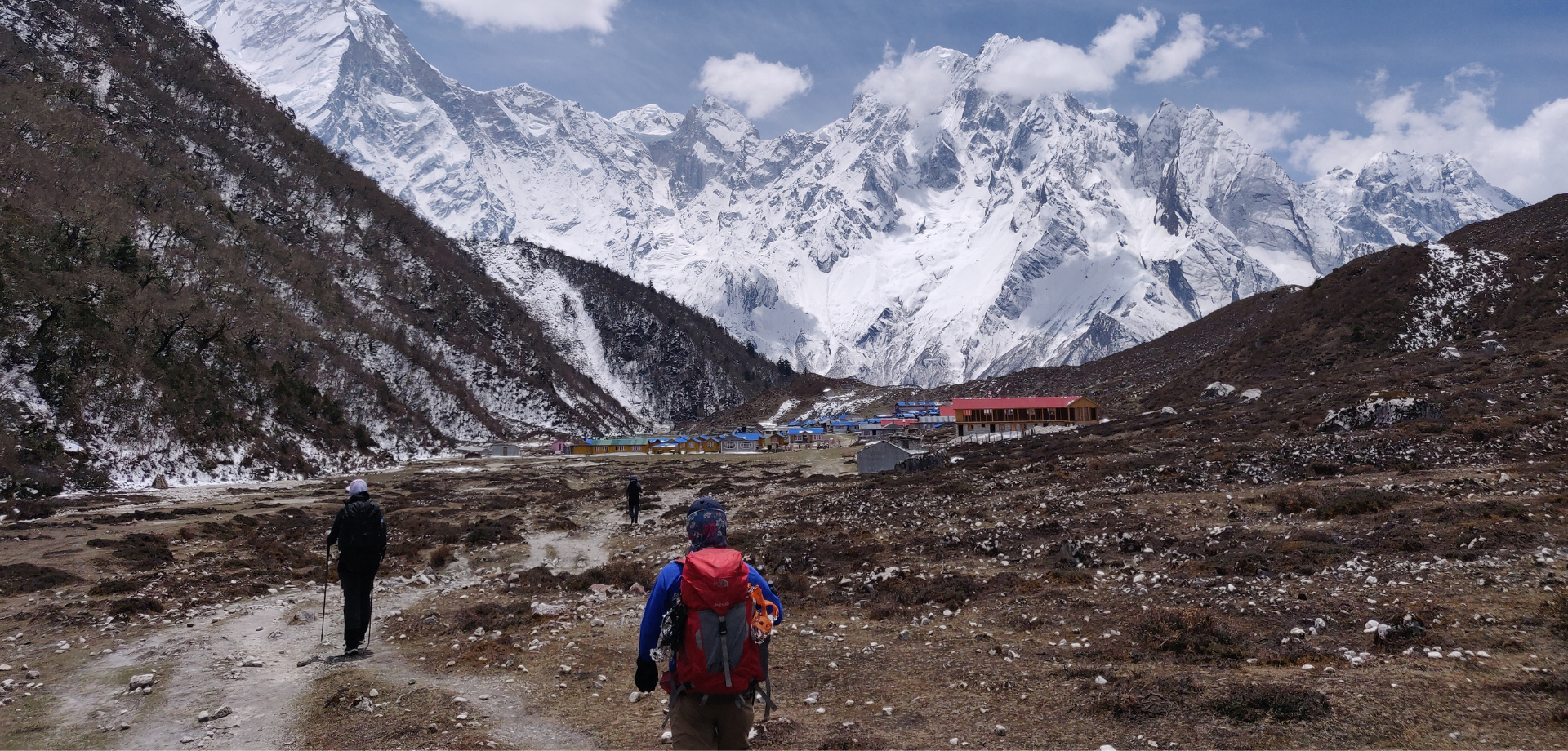
Lorem ipsum dolor sit amet, consetetur sadip scing elitr, sed diam nonumy eirmod tempor invidunt ut labore et dolore magna. Lorem ipsum dolor sit amet, consetetur sadip scing elitr.
View our trips Travel proposal