
Nepal with children

Nepal with kids: the best travel tips
Travelling can sometimes feel stressful, especially when you are bringing children along. But don’t worry, with good preparation, the journey can become a wonderful experience for the whole family. We are happy to share the best travel tips for families in Nepal, based on our own experiences. Curious about how to explore Nepal with kids? Then read on.

Travelling with children in Nepal
We have a daughter ourselves and have explored Nepal with her over the years. This personal experience helps us understand what works well and what may be more challenging for young children. If you are planning a trip to Nepal with young children, there are a few important things to keep in mind.
Vaccinations, drinking water, and hygiene
- Vaccinations: Make sure your children are up to date with all routine vaccinations. Some travel health clinics also recommend additional vaccinations, such as rabies, hepatitis A, and Japanese encephalitis. In Nepal, illnesses can be transmitted through contaminated water or mosquito bites, so good preparation is essential.
- Drinking water: Tap water in Nepal is not safe to drink. Ensure that your children always drink purified or filtered water and use the same water when brushing their teeth. There are several reliable ways to make water safe, see our dedicated blog for more detailed guidance.
- Hygiene: Food is sometimes prepared in less hygienic conditions, which may lead to diarrhoea or stomach discomfort in children. Choosing well-reviewed tourist restaurants can therefore be a sensible option when travelling with young ones. If you are trekking, your guide will usually monitor how meals are prepared along the route.
Transportation – travel sickness and safety
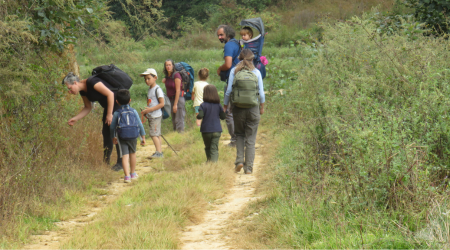
- Transportation: Long journeys on local buses can be challenging, particularly for young children. A private car with a driver is often the most comfortable choice, allowing you to stop along the way for breaks. Experienced local drivers also know the safest and most convenient stopping points.
- Travel sickness: Roads in Nepal are frequently rough and winding, which can cause motion sickness. Bringing suitable anti-motion-sickness medication is recommended, although it is also available locally.
- Car safety: Child car seats are not commonly used in Nepal. If you prefer to use one, it is best to bring your own. Many airlines allow child seats to be transported free of charge when travelling with a young child.
Accommodations
- Sleeping arrangements: Most hotels in Nepal do not provide separate beds for children, and younger children typically sleep in their parents’ bed. If you would prefer your child to have a separate sleeping space, be sure to request this in advance or consider bringing a travel cot.
- Highchairs: Highchairs are uncommon in many restaurants and hotels across Nepal. While this may feel unusual at first, it often becomes part of the cultural experience for children. When dining in local homes, meals are frequently enjoyed while sitting on the floor.
Flexibility is key
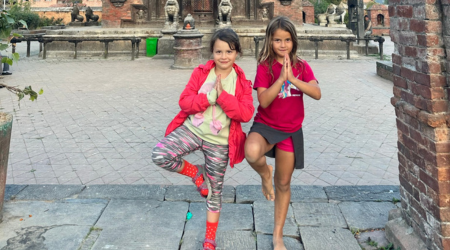
Travelling with children in Nepal calls for a flexible mindset—from both parents and children. Think of the journey as part of the adventure. Things may not always run as smoothly as they do at home, but these unexpected moments often become the most memorable parts of the experience.
Helpful extras for families with children under 10
- Visa: Children under the age of 10 receive a free visa for Nepal.
Cultural sites: In many cases, children also benefit from free entry to cultural attractions.
National parks: Entrance fees to nature parks are often waived for young children as well.
Trekking with children
Altitude sickness in young children
It is important to stay aware of altitude sickness, particularly in young children who may not always be able to explain how they feel. Medical professionals advise avoiding rapid altitude gain when travelling with small children. When visiting Nepal, you already begin at around 1,350 metres above sea level in Kathmandu, so extra care is needed before trekking to higher elevations.
General medical guidance:
- Babies under 1 year: hike below 2,500 metres and sleep below 2,000 metres
- Toddlers aged 1–3: hike below 3,000 metres and sleep below 2,500 metres
- Young children aged 3–6: sleep below 3,000 metres
Best trekking routes for young children
For families with young children, lower-altitude treks are the safest and most enjoyable option. Areas within the Annapurna region offer flexible routes and the possibility to adjust your pace when needed. Short, scenic treks such as Ghandruk or Panchase are particularly suitable for travelling with children.
Trekking for teens and young adults
With older children, more challenging high-altitude treks become possible. However, if your children are unsure about hiking, a long trek in Nepal may not be the best starting point. Trying a shorter mountain walk closer to home, such as in the Alps, can help you understand whether they will enjoy the experience.
Alternative trekking options
If you prefer to avoid the high Himalayas, there are also beautiful lower altitude walks in the Kathmandu Valley and the Chepang Hills. These routes are ideal for families or travellers who would like to minimise long travel times by car.
Guides and porters
Experienced local guides help ensure that your trek runs smoothly by organising meals, accommodation, and daily logistics. For families with young children, travelling with a porter can be especially reassuring, as they can assist when children become tired and provide extra support along the trail.
What can you expect during the trek?
Trekking in Nepal takes you through traditional villages, past waterfalls, and across beautiful mountain landscapes. Children often receive warm attention from local communities, creating meaningful cultural encounters along the way. Each day brings something new to discover, whether it is a village school, farmland, or simply the joy of being outdoors together.
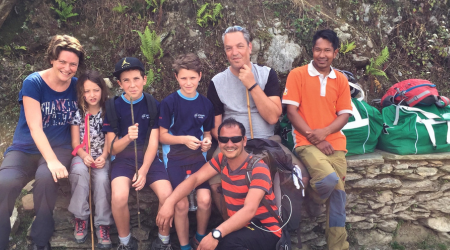
Get ready for an unforgettable journey!
With the right preparation and mindset, travelling through Nepal with children becomes far less stressful than it may first seem. Unexpected moments are part of the adventure, and they often turn into the most treasured memories. We hope these tips inspire you to begin planning your family journey and we look forward to welcoming you to Nepal!
Wel like to keep you informed
Lorem ipsum dolor sit amet, consetetur sadip scing elitr, sed diam nonumy eirmod tempor invidunt ut labore et dolore magna. Lorem ipsum dolor sit amet, consetetur sadip scing elitr, sed diam nonumy eirmod tempor invidunt.
Excited about Nepal?
Lorem ipsum dolor sit amet, consetetur sadip scing elitr, sed diam nonumy eirmod tempor invidunt ut labore et dolore magna. Lorem ipsum dolor sit amet, consetetur sadip scing elitr.
View our trips Travel proposal