
Upper Dolpo trek | Camping | 19 days
- Look out for traces of the elusive snow leopard in Shey Phoksundo National Park.
- Visit the 800-year-old monastery in Shey Gompa and the Heritage in Tsakang.
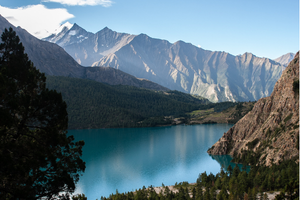
- Dream away at the deep blue Phoksundo Lake
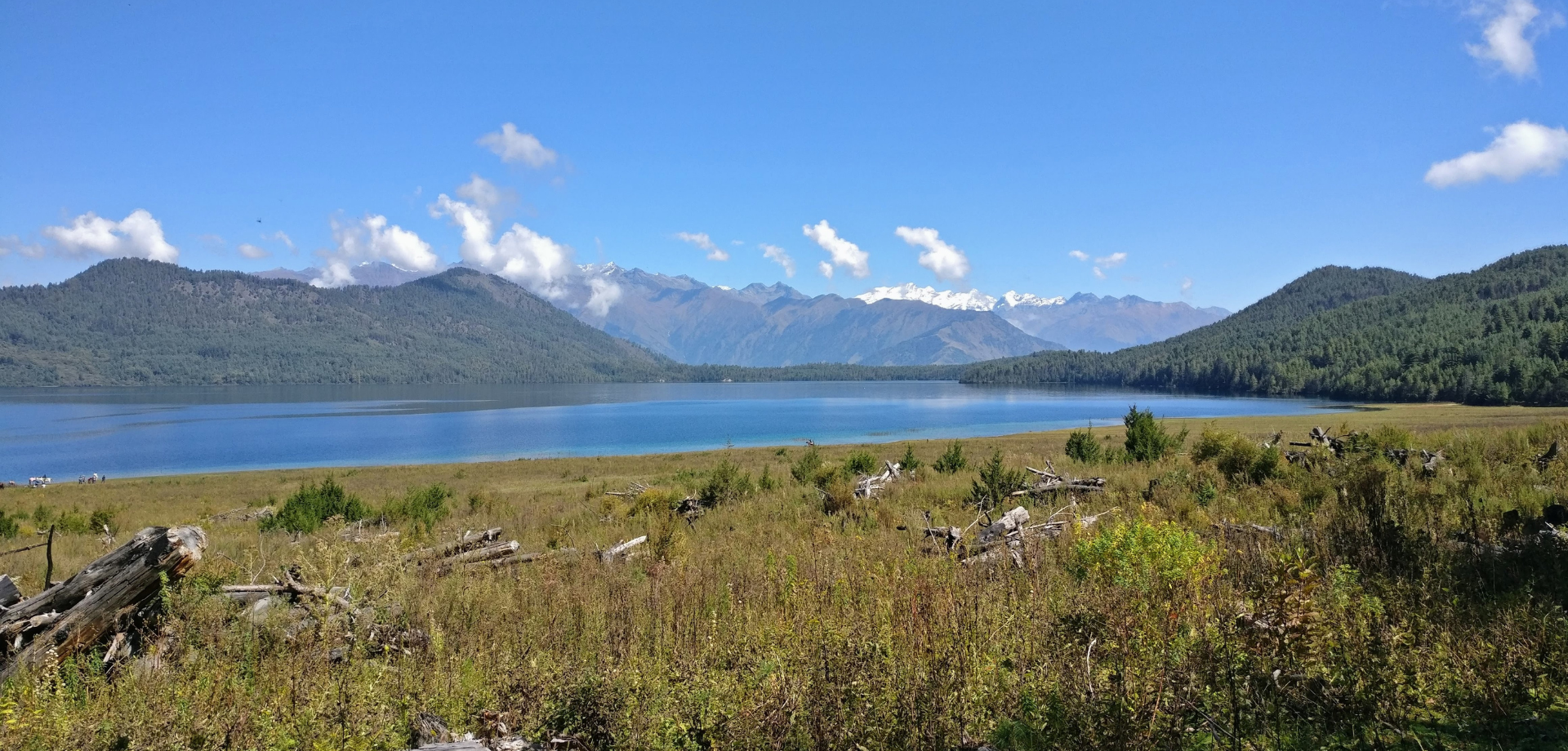
Upper Dolpo trek | Camping | 19 days
19 days from n.t.b. p.p.
Reisvoorstel aanvragenHighlights
During this unique Upper Dolpo camping trek, you will discover one of the most remote and pristine areas of Nepal together with an experienced Nepalese team. You will traverse the spectacular Shey Phoksundo National Park, where, with a bit of luck, you will spot tracks of the mysterious snow leopard, a rare and elusive inhabitant of this region. Along the way, you will visit the 800-year-old monastery in Shey Gompa and the spiritual site of Tsakang, deeply rooted in Bon and Buddhist traditions. As the icing on the cake, the azure blue Phoksundo Lake awaits you — a magical spectacle of colors amidst a desolate mountain landscape.
Trek with a Nepalese team through a remote, pristine part of Nepal.

Keep an eye out for signs of the elusive snow leopard in Shey Poksundo National Park
The protected Shey Phoksundo National Park is not only breathtakingly beautiful but also the habitat of rare wild animals. With a keen eye and a little luck, you can spot traces of the legendary snow leopard, which has its territory here. Although the chance of seeing the animal itself is small, paw prints and remains of prey bear witness to its presence. The mere thought of venturing into its habitat makes the experience special.
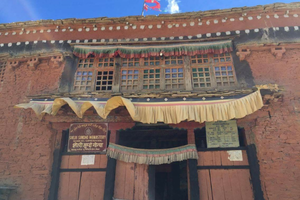
Visit the 800-year-old monastery in Shey Gompa and the Heritage in Tsakang
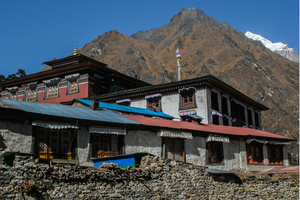
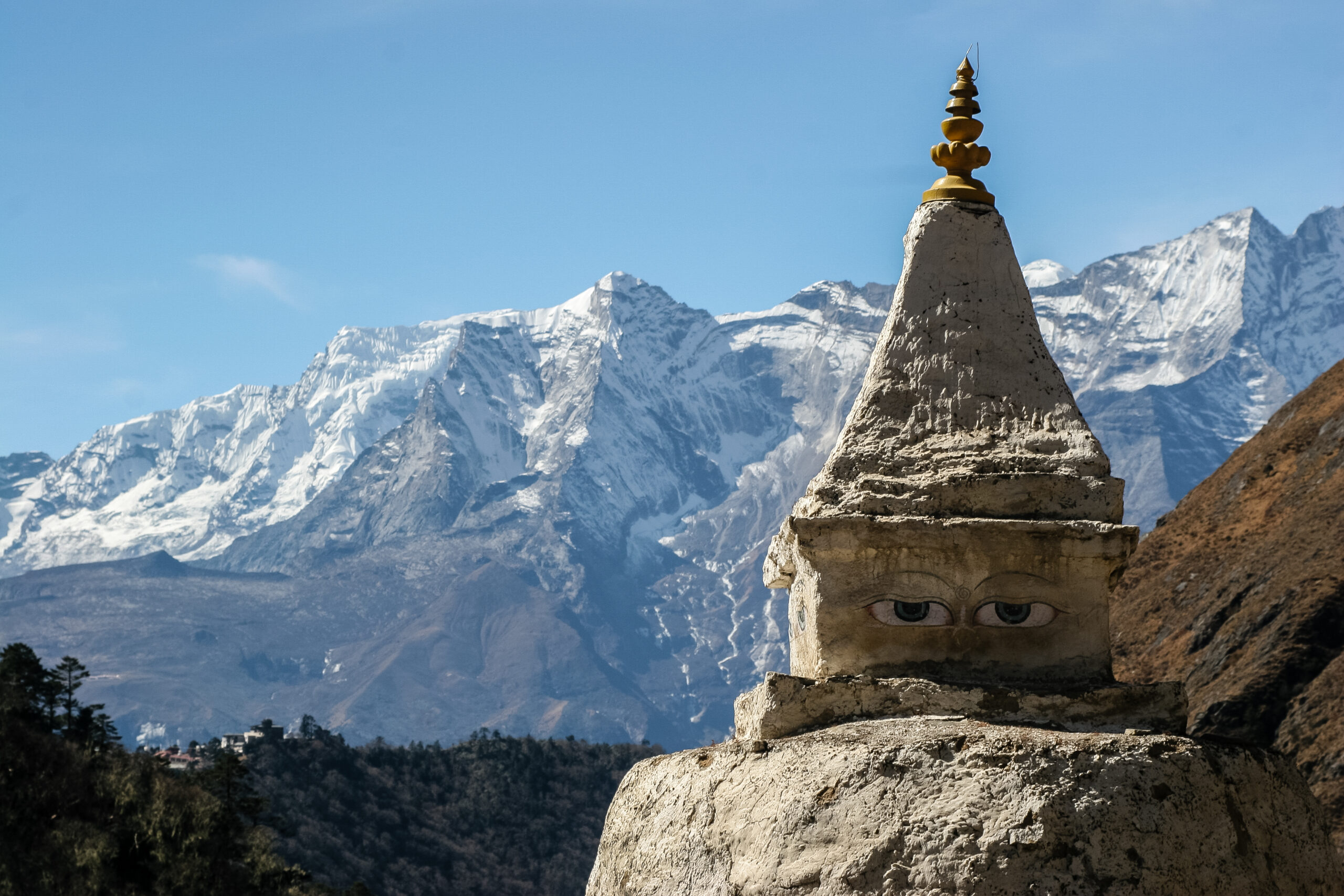
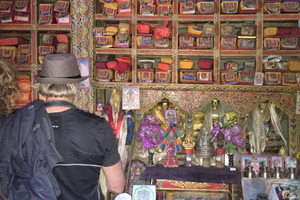
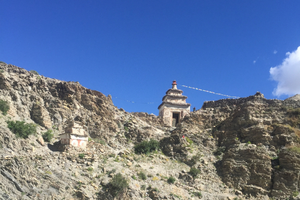
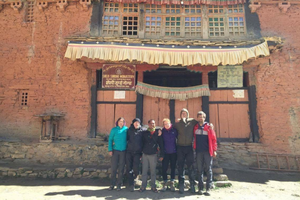
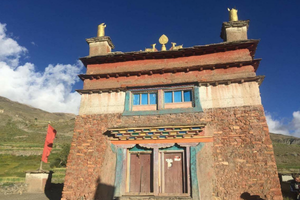
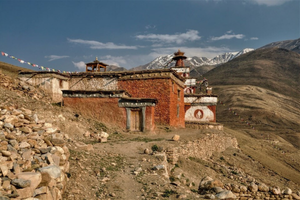
High in the mountains, far from civilization, lies the mysterious monastery of Shey Gompa. This spiritual center, which has played an important role in the religious life of the Dolpo people for over 800 years, radiates a deep peace and strength. The sacred site of Tsakang, where meditating monks have retreated for centuries, also offers a glimpse into the rich religious and cultural traditions of this remote region. These visits are a step back in time as well as a window onto a world that remains largely hidden from the outside world.
Get lost in the azure-blue waters of Lake Phoksundo
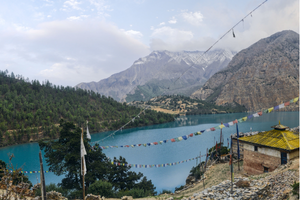
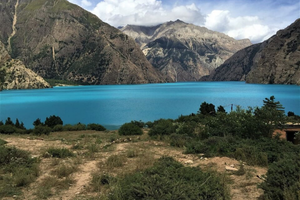
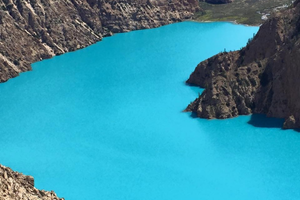
Phoksundo Lake is a visual highlight of this trek: a bright blue, almost surreal mountain lake shimmering amidst rocky slopes and steep cliffs. The crystal-clear water and serene atmosphere make it a place to pause and reflect. On its shores lies the traditional village of Ringmo, where you get a glimpse of the daily life of the Dolpo-pa, the local people. The beauty of this lake is unforgettable — a place that will remain etched in your mind and in your heart for a long time.
Day-to-day
The Upper Dolpo trek is no ordinary hike, but a true adventure through one of the most isolated and impressive regions of Nepal. During this special camping trek, you will discover a world of rugged mountain passes, deserted valleys, ancient monasteries, and vibrant culture. You will travel with an experienced Nepalese team that provides guidance, logistics, and hot meals in the most remote corners. Each day takes you deeper into the heart of Dolpo, where nature is pristine, people still live according to centuries-old traditions, and the silence can be overwhelming. This day-by-day description gives you a clear picture of what to expect — from the first step to the final night camping under an impressive starry sky.
-
Day 1: Flight to Nepalgunj
Today, you take a flight to Nepalgunj in the afternoon. Because flights to Juphal only depart early in the morning, you will spend one night here.

-
Day 2: Flight to Juphal (2475m) / Trekking to Dunai (2140m) - approx. 3 hours
Early in the morning, you take a second flight that takes you even further into the mountains, to Juphal.
Upon arrival, you have to wait a short while until the guide has arranged everything so that you can head into the mountains with a team and sufficient food, along with the tents. Once the Nepalese team is ready to depart and the luggage is loaded, you set off towards Dunai.
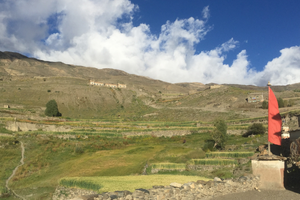
It is a short hiking day today: you walk for about 3 hours between terraced fields until you arrive in Dunai. -
Day 3: Trekking to Chhepka (2720m) - approx. 6 hours
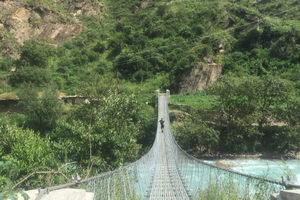
From the center of Dunai, you descend to a suspension bridge and cross the Thuli Bheri Khola. You then walk upstream along the path. The path along the river ascends and descends several times. At the end of this path, you arrive in Sulighat (2282m).
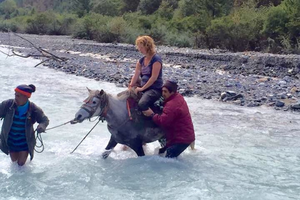
From this village, you continue following the path on the other side of the river to Raktang (2421m), where you cross the river again. Another hour later, you cross the river again in Shyanta, a winter residence for the people of Ringmo. After crossing a tributary of the river, the path continues uphill to Chhepka (2720m). -
Day 4: Trekking to Jharina Hotel (3020m) - approx. 6 hours
Today, you first walk through a walnut forest. Afterwards, you cross the Suli Khola again, only to cross it again an hour later. The path continues through a dense forest.
After crossing a side arm of the river, the path rises steeply for about 380 meters until you reach a wide grassy plateau. The flat path on the plateau lasts only a moment, as you soon descend back to the river.
You continue walking towards Sanduwa (2960m). Before arriving in Sanduwa, you cross the river once more near the Tapriza Secondary School and the Gompa.
If you wish, you can visit the school and perhaps make a small donation. From the school, you continue walking along the bank of the Phoksumdo Khola river.
After about twenty minutes, you reach the campsite at Jharina Hotel (3020m). -
Day 5: Trekking to Ringmo (3640m) - approx. 4 hours
The path climbs gently along the bank of the Phoksumdo Khola and continues ascending through a cedar and pine forest. It is a long climb that passes another winter roost, Polam (3400m), where permits are checked again.
You continue climbing on a winding and steep path to a mountain ridge, where you can enjoy a magnificent view of the turquoise and cobalt-blue Lake Phoksumdo and a gigantic waterfall (3800m).
The path now continues downhill through a birch forest to the clear source of the waterfall. Afterwards, you ascend gently again to Ringmo (3640m). -
Day 6: Acclimatization day in Ringmo: day hike
Today, the guide will take you on a walk around the beautiful lake. Lake Phoksumdo is a protected nature reserve and is Nepal’s deepest and second-largest lake.
Ringmo is a traditional Tibetan village located on the southern shore of the lake. The local people produce various handcrafted products there.
Approximately 1.5 km from Ringmo, on the southeastern shore of the lake, lies Pal Sentan Thason Chholing Gompa, of the Bon religion. This religion is quite similar to Tibetan Buddhism, with the only difference being the practical execution of a number of rituals, which are performed in reverse. For instance, among the Bons, you pass a mani wall or chorten on your left side, and when walking around or inside a gompa, you walk counter-clockwise. In Tibetan Buddhism, you leave a mani wall or chorten on your right side and walk around a gompa clockwise. -
Day 7: Trekking to Phoksundo Khola Camp (3750m) - approx. 5 to 6 hours
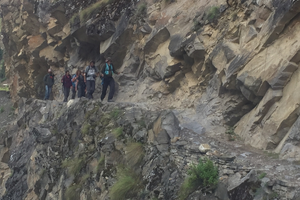
Time for one of the most spectacular parts of the trek! Along the west side of the lake, you walk towards the steep rock faces, which you then cross via a steep path. The path doesn’t rise much for the first half hour, but you have a magnificent view of the village and the lake.
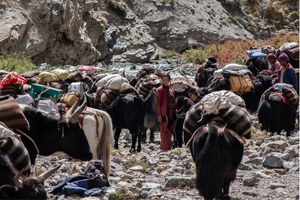
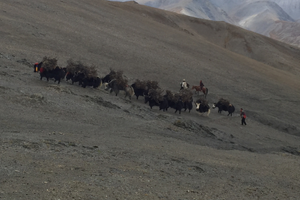
After crossing a small stream, the path climbs steeply to 4,140 meters. Fingers crossed you don’t run into a caravan of yaks here!
Next, the path descends to the flood plain of the Phoksundo Khola at the northern part of the lake (3,630m). After half an hour, you cross the river and walk through a pine forest that later changes into a silver birch forest. Did you know that the bark of the silver birch is often used by Tibetans to write prayers, which they then leave behind on mountain passes or at important chortens?
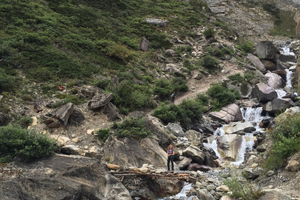
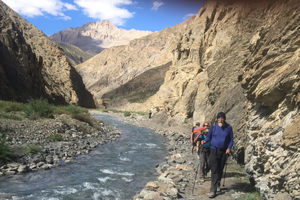
You cross the river several times on large stepping stones before climbing into the valley. Afterwards, the valley narrows again into a gorge, and you walk along the river once more. You soon arrive at the campsite.
Je steekt verschillende keren de rivier over op grote stapstenen om dan te klimmen naar de vallei. Nadien versmalt de vallei opnieuw tot een kloof en wandel je opnieuw langs de rivier. Je komt al gauw aan op de kampeerplaats. -
Day 8: Trekking to Pass Camp (4717m) - approx. 5 to 6 hours
From your campsite, it is only a few minutes to the beginning of the gorge. The path leads uphill into the gorge, crossing the river several times.
The sound of the river in the gorge makes conversation impossible here, so staying together is essential. The guide keeps a close eye on ensuring everyone follows.
The slope of the path decreases as the gorge widens. You continue walking until you reach a small valley. At the end of this valley, there is a beautiful small waterfall that left behind a gully (4717m). You continue ascending along a zigzagging path next to the waterfall. After about 100 meters, the path becomes less steep.
You continue climbing to the higher parts of the valley, which gradually widen into a large basin (4810m). You camp in this basin.
-
Day 9: Trekking to Shey Gompa (4343m) - approx. 5 to 6 hours
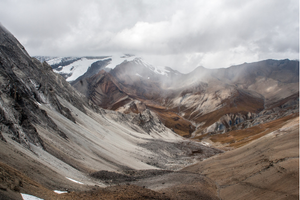
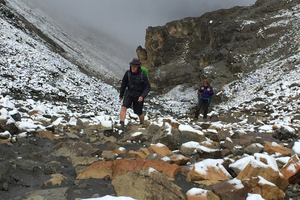
On the ridge above the basin lies the Nangdala La pass, which we will cross today. The path leading up to it is a pass with loose slate and climbs relentlessly for 2½ hours.
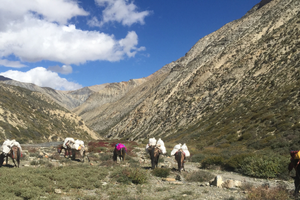
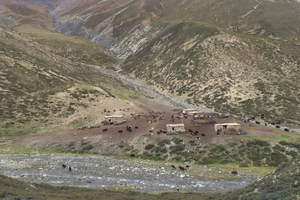
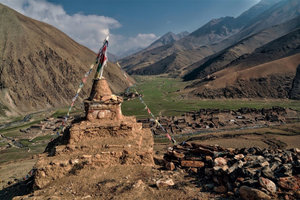
Once at the top of the Nangdala La pass (5350m), you will see a wide valley sloping down to a stream, which you will reach an hour after crossing the pass. The path now descends gently further into the valley, crossing the stream several times. Many yaks and sheep graze in this valley.
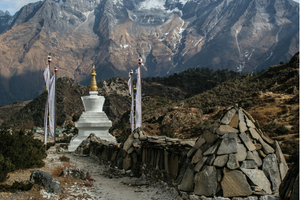
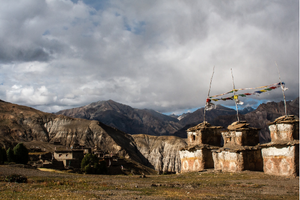
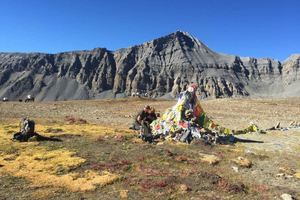
An hour and a half later, you reach the red walls of Shey Gompa (4,343m), surrounded by mani walls and chortens and situated in a green meadow. -
Day 10: Acclimatization day in Shey Gompa: visit to the Hermitage of Tsakang
Located on the cliffs about an hour north of Shey Gompa is the Hermitage of Tsakang. In the past, the Lama of Shey lived here, but the current incarnation of this lama lives in Kathmandu. If you can find the key keeper here, it is worth viewing the frescoes inside.
Here, in addition to the hermitage, you can also visit the Gompa of the Kagyupa sect. There are many legends about the founder of Shey Gompa and Tsakang. Tsan-zin Ra Ra lived in the early 17th century and made Dolpo one of the holiest valleys in Nepal. The local people insist that not a single animal be killed in and around Shey Gompa. This may explain why you have a greater chance of seeing blue sheep and the snow leopard in this valley. -
Day 11: Trekking to Namgung (4360m) - approx. 6 to 7 hours
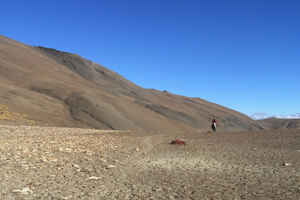
Heading east from the Gompa, you walk into the arid Sephu Khola valley, following the path along the river. At a certain point, you enter a side valley and climb for 2.5 hours on a loose path to the Sela La mountain pass (5095m).
After the pass, you descend into a narrow valley and continue walking to the small village of Namgung (4360m). -
Day 12: Trekking to Saldang (3770m) - approx. 2 to 3 hours
Today is a short hiking day, which is nice for a change!
At the end of the valley, you climb over the mountain ridge that forms the bank of the Nagon Khola River.
Next, you walk northwest along the Nagon Khola River to the administrative center of Upper Dolpo, Saldang (3770m).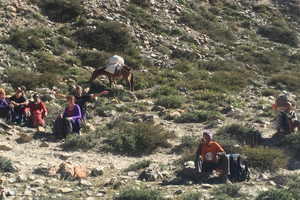
-
Day 13: Trekking to Chagaon (3840m) - approx. 3 hours
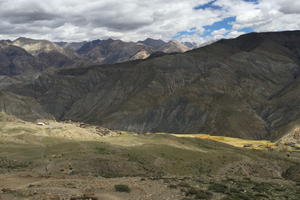
The Nagon Khola valley has gently sloping hillsides traversed by an easy, undulating path. Settlements blend into one another, offering you a beautiful view of daily life in this area.
A quiet 3-hour walk from Saldang lies Chagaon (3840m), where you can visit a small Gompa beside the river. On the ridge above the village, there is another hermit gompa, which is very popular with locals and Tibetan lamas. -
Day 14: Trekking to Dharsuma Dhoban - approx. 6 to 7 hours
The further south you hike, the steeper the valley walls become and the wilder the terrain gets. A crumbling fort stands above the river behind the last village, Chasip. The path ascends slowly along the river.
After an hour and a half of hiking, you cross the river and also see a few stone houses in Rakyo Kharka. You may have to walk through the water here briefly, should the river have damaged the path.
Two hours later, you arrive at a large tributary of the river, which has its own valley. You hike into this Dachung Khola valley. After another approximately two hours of hiking, the river splits again. You cross the Dachung Khola river and once again follow the path that runs in the side valley.
You hike in this valley with steep walls until you reach a flat grassy field. This is where we pitch our tents. -
Day 15: Trekking to Tokyu (4209m) - approx. 5 hours
You start with a gradual climb of about 500 meters to the Jyanta La pass (5220m).
After crossing the pass, you descend into a large, narrow mountain valley. Towards the end, it is boggy on the banks of the Jyanta Khola river. You continue descending slowly along the river until, after an hour and a half, you encounter a wall of loose scree. Once you pass this wall, the descent slows down and you cross the river.
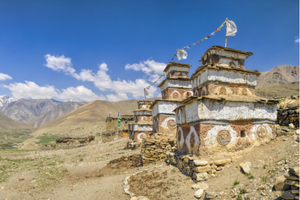
As the valley gradually widens, you pass several mani walls and chörtens. A final descent brings you to the campsite near the village of Tokyu (4209m). -
Day 16: Trekking to Ghyam Ghar - approx. 6 hours
In the broad, fertile Thakchu Valley lie various Magar and Bhotia villages; they are situated close together and almost merge into one another. These permanent settlements are among the highest in the world, located at an altitude of 4,100 meters. Consequently, the green valley is very popular with Tibetan nomads for grazing their livestock.
There are both Buddhist and Bon Gompas in this valley, although they are not as old as those in Upper Dolpo.
The path runs from Tokyo through this valley and is a pleasant walk past villagers going about their daily tasks. Dho Tarap is the last village in this valley, and from there you descend into the narrowing Tarap Khola valley, where you continue walking to Ghyamghar. -
Day 17: Trekking to Laisicap (2775m) - approx. 7 hours
The valley becomes a gorge with a wild river, which you cross via a bridge. You descend slowly to a fork with a tributary. You continue following the path to Chhyugar (3440m).
The path has been carved out of the rocks and now descends more steeply. The final section is a winding, steep path leading to the beautiful waterfall in Laina Odar (3770m).
The path continues to descend all the time, and suddenly the Tarap Khola valley merges into the Thuli Bheri Khola valley. A little further on is the campsite in Laisicap (2775m). -
Day 18: Trekking to Dunai (2140m) - approx. 5 hours
After days of ascending and descending on narrow and adventurous paths, it is a relief to walk on a larger road today along the Thuli Bheri river. You will be walking for about 5 hours today.
There is little shade on this section, so sunscreen and plenty of water are a must.
About an hour’s walk from Laisicap, you reach the Tarakot settlement (2540m), a popular wintering site for the people of Do Tharap.
After the village, you continue walking along the other bank of the river to Dunai (2140m). Just before Dunai, you cross the river again. -
Day 19: Trekking to Juphal - approx. 3 to 4 hours & Domestic flights to Nepalgunj & Kathmandu
Today you get up early and walk to Juphal, the end point of your trek.
In Juphal, you say goodbye to the local kitchen team and the person responsible for the donkeys and/or porters.
Here, you take a domestic flight to Nepalgunj and then a second flight to Kathmandu.
You have the rest of the day free to spend in Kathmandu.



Overnight stays
Overnight stay in Nepalgunj
Before setting off on the Upper Dolpo trek, clients spend one night in Nepalgunj, a town in southern Nepal, close to the border with India. Here you will stay in a simple but comfortable hotel with basic amenities such as an en-suite bathroom, a fan or air conditioning, and often Wi-Fi in the lobby.
Accommodation during the trek
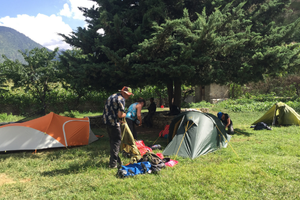
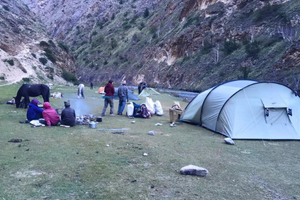
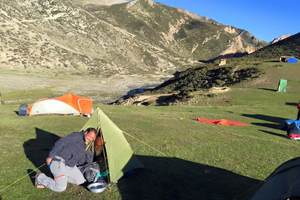
During this remote and adventurous trek, you will not be staying in teahouses as in other parts of Nepal, but in comfortable tented camps set up by our local team. The campsites are often situated in unique, secluded locations with impressive views of the mountains or along rivers. You will sleep in sturdy two-person tents with a mattress and a warm sleeping bag (available to hire on site if required).
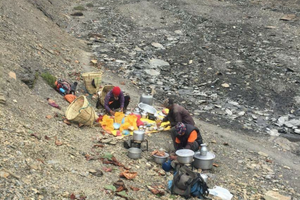
Our team takes care of setting up the tents every day, preparing nutritious, varied meals in a separate kitchen tent, and providing hot drinks to keep your energy levels up. A simple toilet tent is provided and, where possible, a washing tent too. Don’t expect luxury, but do expect a unique experience where you’ll camp deep in the heart of the Himalayas in comfort, far away from mass tourism.

Price Information
The price for the Upper Dolpo trek is:
Adults: from € (to be confirmed) per person
, with a minimum of 2 participants
This camping trek can only take place with a minimum of 2 participants.
Inclusief
- Briefing with the guide for the trek
- Transfer from hotel in Kathmandu to the airport
- Domestic flight to Nepalgunj
- 1 overnight stay in a basic hotel in Nepalgunj
- Domestic flight to Juphal
- 17 nights in double tents
- 18x breakfast, 17x lunch, 17x dinner
- Rent cooking equipment, tents, ...
- English-speaking guide (his salary, insurance, meals, transport and accommodation)
- Nepalese team: cook, porters,... (their wages, insurance, meals, transport and accommodation)
- Necessary trekking documents for the region (including the special permit of 500 USD per person)
- Domestic flight Juphal Nepalgunj & Nepalgunj - Kathmandu
Exclusief
- Entrance fees/donations at cultural sites
- Stay in Kathmandu
- Dinner in Nepalgunj
- Soft drinks & alcoholic beverages
- Personal expenses
- Visa for Nepal
- International flights
- Travel and cancellation insurance
- Anything not explicitly stated as included
Practical
The Upper Dolpo Trek is one of the most remote and mystical treks in Nepal. This adventurous camping trek takes you through the pristine west of the country, where centuries-old Tibetan traditions are still very much alive. During this multi-week expedition, you will hike through vast valleys, past turquoise lakes, and over high mountain passes, with impressive vistas of the Himalayas along the way. Due to its remote nature, this is a camping trek with full logistical support. This page offers practical answers to frequently asked questions about this unique trek, so that you can set off well-prepared.
-
How difficult is Upper Dolpo Trek?
The Upper Dolpo trek is a challenging, multi-week camping trek that requires physical fitness. You will hike at high altitudes (sometimes above 5,000 meters) and cross multiple passes. Daily distances vary between 5 and 8 hours of hiking per day. Thorough preparation, including hiking training and experience with multi-day treks, is highly recommended.
-
Is this trek suitable for travelers over 55 or families?
Experienced hikers aged 55+ and sporty families with older teenagers can undertake this trek, provided they are well physically prepared and acclimatize to the altitude. Due to the camping nature and remote location, it is important that you have an adventurous spirit and some flexibility. We provide a professional team that fully supports you along the way.
-
How long does the Upper Dolpo trek take?
The full Upper Dolpo camping trek takes an average of 22 to 24 days, including the days spent travelling to the start point, acclimatising and taking domestic flights. It is a long expedition for which you must allow plenty of time.
-
Where do we stay overnight during this trek?
Because there are no lodges in this area, it is a full camping trek. You will sleep in comfortable double tents with a separate dining tent and kitchen team. Our team provides hot meals, porters, and all necessary equipment to make this adventure comfortable.
-
What about altitude sickness and acclimatization?
The route is mapped out so that you can gradually acclimatize to the altitude. We provide sufficient rest days, and the guiding team is trained to recognize the symptoms of altitude sickness. We take no risks: safety always comes first.
-
Do I need a special permit?
Yes, the Upper Dolpo trek requires a special restricted area permit. These can only be applied for through a recognized travel agency like ours. We take care of the entire permit process. For this, we need a copy and the original passport upon arrival in Kathmandu.
Note: The original passports of all participants are required to obtain the special Upper Dolpo permit . Therefore, it is necessary to plan at least one full extra day after arrival in Kathmandu before starting the trek . We will ensure that the permits are arranged in time as soon as we have collected your passport from the accommodation. Without this margin, it is not possible to obtain the required permits.
-
When is the best time to travel for this trek?
The best period is from late May to September, when the high passes are snow-free. Upper Dolpo lies in the rain shadow of the Himalayas, making it hikeable even during the monsoon. In the spring, there may still be too much snow.
-
What happens if the flights to Juphal (Dolpo) are cancelled?
Domestic flights to Dolpo are weather-dependent and are sometimes cancelled. In that case, we will try to book you on the next available flight. Please allow for possible delays and avoid tight connections. We recommend planning at least one extra buffer day in Nepalgunj or Kathmandu.
-
Is there Wi-Fi or mobile coverage during the trip?
There is little to no mobile coverage during this trek. You are truly ‘off the grid’. At a few higher points, there may be an occasional mobile signal, but there is no internet access.
-
What is the difference between Lower and Upper Dolpo?
Lower Dolpo is the more accessible part of the region, where some sections can be explored via lodges. Upper Dolpo is much more remote, higher-altitude, and culturally unique. Here, you experience authentic, almost Tibetan life in centuries-old villages such as Shey Gompa and Saldang.
-
Is this trip suitable for travelers seeking a spiritual and cultural experience?
Certainly. Upper Dolpo is steeped in Buddhist and Bön traditions. You will visit sacred monasteries, pilgrimage routes, and villages where traditional life still thrives. Many travelers experience this trek as not only physically challenging but also deeply spiritually enriching.
Note: The Upper Dolpo trek became internationally known thanks to the award-winning book * The Snow Leopard * by writer and biologist Peter Matthiessen . In this spiritual travelogue, he describes his journey through the Dolpo region in 1973, in search of the rare snow leopard and inner peace after the loss of his wife. His journey to Shey Gompa, a sacred Buddhist monastery deep in the mountains, offers a unique glimpse into the rugged beauty and spiritual power of this region. For many travelers, this book serves as an inspiring preparation for the trek.
-
Will I see a snow leopard during this trek?
The chance of seeing a snow leopard during the Upper Dolpo trek is very small, but not impossible. These mysterious big cats live in the remote mountain regions of Dolpo and are spotted here sporadically, usually only by local shepherds or, with a lot of luck, by experienced wildlife photographers. Along the way, however, you will regularly come across tracks, claw marks, or scent markings—signs that you are in their habitat.
-
Why is the Upper Dolpo trek so much more expensive than a teahouse trek?
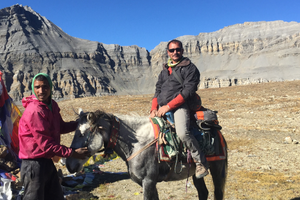
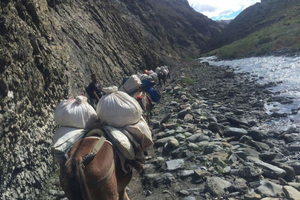
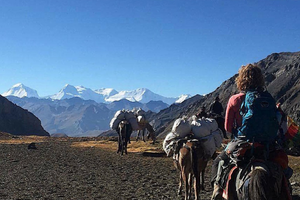
The Upper Dolpo trek is a full-camping trek through one of the most remote regions of Nepal. Unlike popular teahouse treks (where you stay in simple lodges with meals), on a camping trek everything must be brought along: tents, sleeping mats, kitchen utensils, food, cooking equipment, etc. This requires a full support team of porters and/or ponies, guides, and a cook.
Additionally, there is a mandatory permit for Upper Dolpo, which is more expensive than for other treks (USD 500 per person for 10 days), and domestic flights to Juphal (via Nepalgunj) are required, which are weather-dependent and costly.
In short: it is a logistically intensive expedition in an isolated area. The price reflects the unique experience, the guidance, and the necessary behind-the-scenes organization.

Trekking in Nepal with guides who truly care about you
Our guide Chhoisang Lama and sherpa Gaknaht were wonderful people. Perfect guides for anyone looking to trek in Nepal.

- Mardi Himal trek
- April 2025
Reliable family business with an eye for detail: our beautiful Langtang experience
I highly recommend Nepal Inside Out. It is a family business with a long history of experience in travel and trekking across the region.
- Roundtrip with Langtang trekking
- April 2025
Travel safely and well cared for through Nepal thanks to a fantastic team
We always felt safe and well looked after.
- Roundtrip with Lower Annapurna trek
- March 2025
An unforgettable family trip with trekking in Nepal during the Easter holidays
We were also so glad to have made this trip as a whole family and to witness the interactions between the local people and our children.
- Family trrip with 4-days trekking
- April 2024
Nepal with the family? This trip exceeded all our expectations!
Many thanks to the wonderful team at Nepal Inside Out! They went above and beyond to organise our trip through Nepal with great care. The Langtang trek was beautiful, and we were accompanied by a kind guide and two brilliant porters who helped us enormously.
- Roundtrip with Tamang / Langtang valley trekking
Discover beautiful Nepal with Nepal Inside Out.
From breathtaking views to beautiful trails and warm evenings together. Nothing is too much trouble, and every effort is made to make the trip truly memorable. Many thanks and highly recommended for anyone wanting to discover Nepal with Nepal Inside Out.
- Roundtrip with Mardi Himal trekking
- November 2024
Perfect 3-week tour through Nepal
Maaike and Chuda put together the perfect three-week trip through Nepal for us, including adventurous treks with stunning views, cultural visits with knowledgeable guides, and truly enriching encounters with local Nepali communities. The whole team is well organised and made up of genuinely dedicated people who act quickly whenever something is needed or something has not gone to plan. Highly recommended for anyone looking to book a trip to Nepal.
- Roundtrip with Mardi Himal trekking
- October 2023
Excited about Nepal?
Lorem ipsum dolor sit amet, consetetur sadip scing elitr, sed diam nonumy eirmod tempor invidunt ut labore et dolore magna. Lorem ipsum dolor sit amet, consetetur sadip scing elitr.
View our trips Travel proposal