
Sherpa Culture trek along the Everest trail | 9 days
- Views of some of the highest peaks in the world, including Mount Everest
- Authentic Sherpa villages along the Everest trail: Khumjung and Kungde
- Meet the local indigenous Sherpa people along the Everest trail
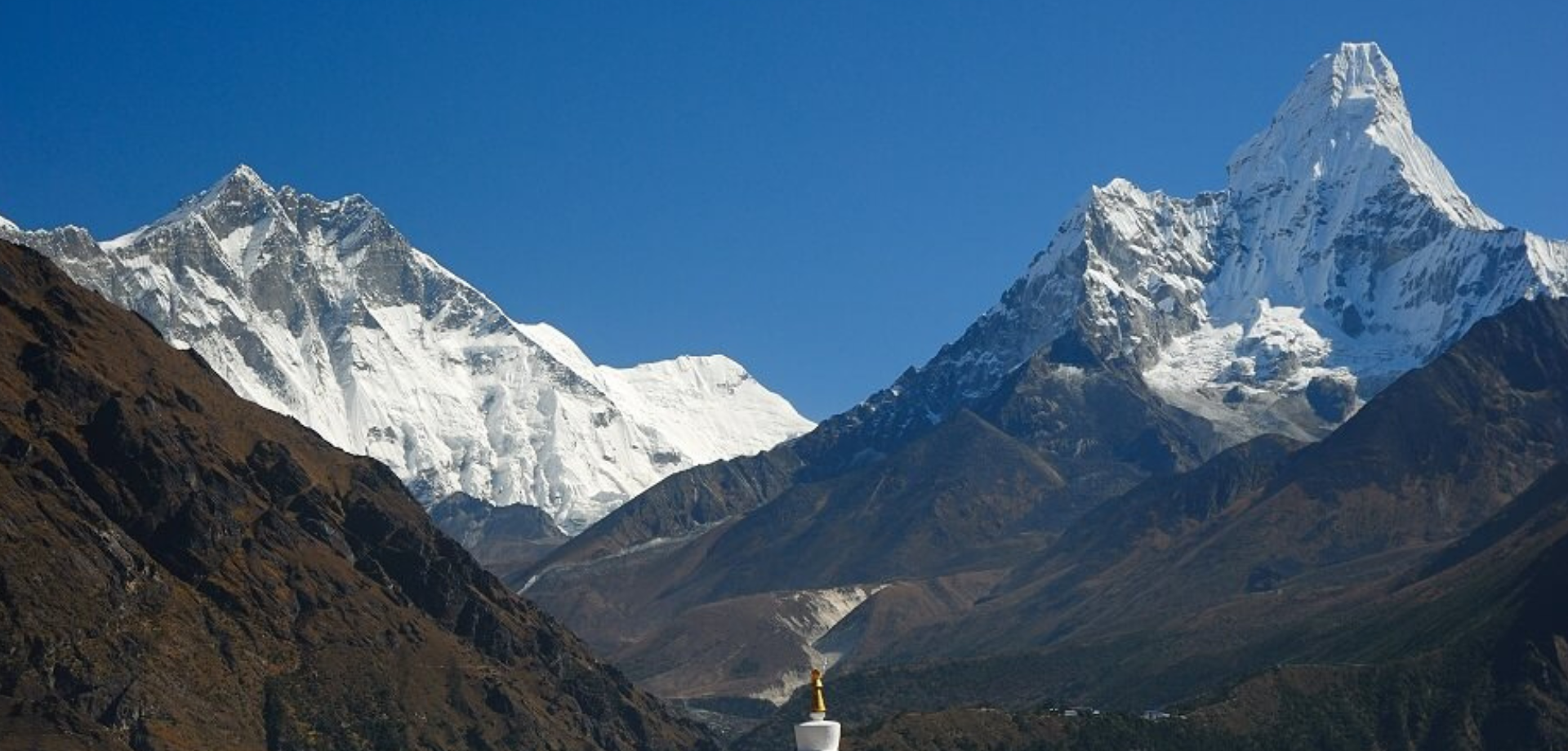
Sherpa Culture trek along the Everest trail | 9 days
9 days from n.t.b. p.p.
Reisvoorstel aanvragenHighlights
The Sherpa Culture trek takes you through the heart of the Himalayas, where you’ll get to know the warm Sherpa community and their Buddhist traditions. You’ll visit authentic villages such as Khumjung and Kungde, admire mighty peaks such as Mount Everest, and spend a spiritual moment at the famous Tengboche Monastery. A peaceful yet impressive trek brimming with culture and nature.
Views of some of the world’s highest peaks, including Mount Everest
This route offers breathtaking views of the mighty Himalayas. From various vantage points, you can see majestic peaks such as Mount Everest, Lhotse, Thamserku and Ama Dablam. The views are at their clearest in the morning – an unforgettable experience for nature lovers and photographers.

Meet the local Sherpa people
The Sherpas have inhabited the Himalayan region for generations and are renowned worldwide for their strength, hospitality and connection to Buddhism. During this trek, you will have the opportunity to experience their unique way of life up close: how they live in harmony with nature, uphold their spiritual traditions and create a warm home in the mountains using simple means.
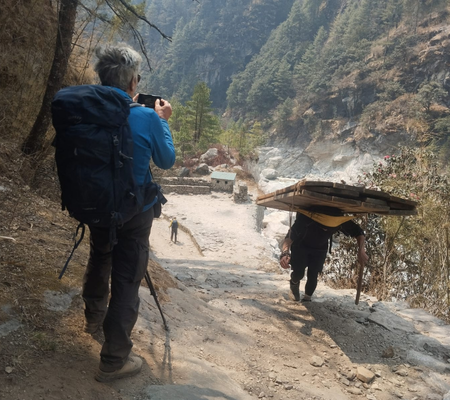
The authentic Sherpa villages of Khumjung and Kungde
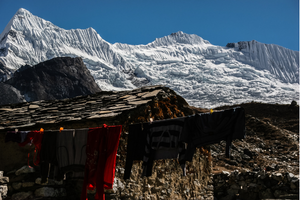
In the picturesque villages of Khumjung and Kungde, you’ll discover the daily life of the Sherpa community. Stroll past traditional houses, visit the local school or the small monastery, and savour the tranquillity of mountain life. There’s no rush here, just a way of life rooted in simplicity, spirituality and a sense of community.
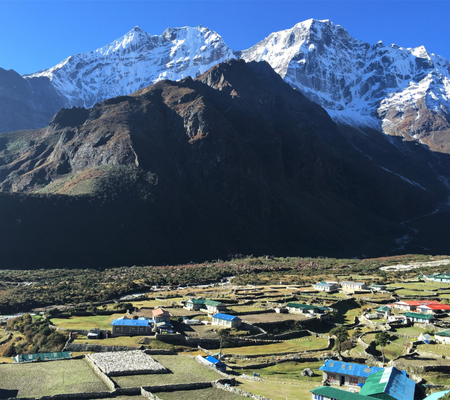
Visit to the monastery in Tengboche
The Buddhist monastery of Tengboche is a spiritual highlight. Perched on a ridge overlooking Mount Everest and the surrounding peaks, this place exudes serenity. Here, you can attend prayer services, admire the colourful murals and immerse yourself in the ancient rituals of Tibetan Buddhism.
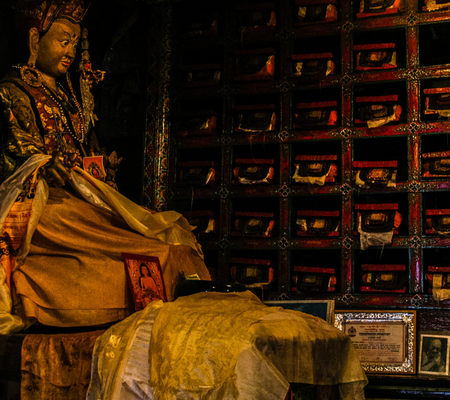
Day-to-day
This trek takes you along ancient trails through the Sherpa village, offering ever-changing, breathtaking views of the Himalayas. Along the way, you’ll discover monasteries, mountain villages and daily life in one of Nepal’s most unique cultures. A journey filled with nature, encounters and reflection.
-
Day 1: Domestic flight to Lukla & trek to Phakding (2,652 m) – approx. 4 hours
Today starts early. In the early morning, you’ll head to the airport with your guide for the flight to Lukla (2,853 m). Lukla is the gateway to the Khumbu region and the starting point of your trek! This flight gives you a foretaste of the splendour of the Himalayas, and you’ll catch your first glimpse of Mount Everest in the distance.
In Lukla, you’ll meet your porter and set off towards Phakding (2,600 m). This village lies along the main route in this area and is home to a few lovely lodges where you’ll spend the night.
Be aware of domestic flights to Lukla
During peak season (October, November, April and May) domestic flights to Lukla do not depart directly from Kathmandu. Instead, you will first travel by car or bus for about 4-5 hours to the small airport of Manthali (Ramechhap), from where you will take an early morning flight to Lukla. This is important to take into account when planning your trip.
-
Day 2: Trek to Namche Bazaar (3,440 m) – approx. 4 to 5 hours
You continue walking upstream along the banks of the Dudh Kosi River, crossing the river twice via suspension bridges until you reach the village of Monjo. This is where Sagarmatha National Park begins.
Once again, you cross a high suspension bridge, this time at the confluence of the Dudh Khosi and the Bhote Khosi. You climb uphill to Namche Bazaar. Namche is the capital of the region and a bustling market town where Tibetans sell their wares. From Namche, you also have views of several high peaks. -
Day 3: Extra day in Namche (acclimatisation)
Yesterday you climbed 640 metres. To acclimatise to the altitude and the lower oxygen levels, you will stay in Namche for an extra day today.
You can walk to the Museum Viewpoint. From this viewpoint, you can see Mt Everest, Lhotse, Ama Dablam, Thamserku, Taboche and others in all their grandeur.
In Namche, visit the Sherpa Museum where you can learn about the local people and the area. Take the afternoon off and enjoy a pastry in one of the bakeries or play a game of pool. Today, let your body gently adjust to the altitude. Be sure to drink plenty of water – about one liter per 1,000 meters, so at least 4 liters.Sustainable tip: visit the Sagarmatha Next project
Want to learn more about waste management in the Himalayas and contribute to sustainable tourism? Then be sure to visit the Sagarmatha Next project in Syangboche, near Namche Bazaar. This innovative center focuses on raising awareness about plastic pollution in the Everest region and turns waste into unique works of art. An inspiring project that shows how circular thinking is possible in remote mountain areas. -
Day 4: Trek to Khumjung (3,790 m) – approx. 4 hours
You get up early and, if there are no clouds in the morning, you’ll have a magnificent view of Kongde Ri towering above Namche Bazaar.
After breakfast, you’ll set off on your trek to Khumjung via Syangboche and the old airstrip. Along the way, you’ll enjoy stunning views of Lhotse, Ama Dablam and Thamserku. If there are no clouds, you can also see Mount Everest, and in the afternoon you’ll visit Khumjung Monastery. Inside stands a large statue of Guru Rinpoche. This monastery also houses a skull which, according to them, comes from a Yeti. You can also visit the school founded by Sir Edmund Hillary.
Another Sherpa village you will visit today is Khunde. You will walk slightly uphill to Khunde through potato fields. There you can visit Khunde Hospital and Khunde Monastery. The view from above of Khunde and Khumjung is magnificent.🏔️ Community is key
Cooperation and solidarity are at the heart of Sherpa life. Villagers help each other with agriculture, build houses together, and organize communal ceremonies. Guests are warmly welcomed, especially in the remote mountain villages. -
Day 5: Trek to Tengboche (3,870 m) – approx. 7 hours
The path descends to the Dudh Khosi River. You’ll enjoy spectacular views of Ama Dablam (6,696 m), Kantega (6,779 m), Mount Everest (8,848 m) and Lhotse (8,501 m).
You cross the river at Phunki Thanga and, in the afternoon, climb through the rhododendron forest to the top of the hill. Suddenly, Tengboche lies before us, home to the most important monastery in the Khumbu region. Be sure to pay a visit to this monastery. What a magnificent view you have from here!🕉️ Deeply rooted in Tibetan Buddhism
The Sherpas follow Tibetan Buddhism, which plays a central role in their daily lives. In their villages you will see prayer flags, mani walls and monasteries. Many festivals and rituals are connected to the lunar calendar and Buddhist traditions. -
Day 6: Trekking to Namche (3,440 m) – approx. 5 to 6 hours
From Tengboche, you head back down into the valley. After lunch, you cross another suspension bridge and climb steeply up the other side of the river, passing a few small villages along the way.
Finally, you continue along the mountainside and eventually arrive back at the familiar Namche Bazaar. -
Day 7: Trek to Monjo (2,835 m) – approx. 4 hours
You walk back from Namche Bazaar towards Lukla. You descend and cross the high suspension bridge. You walk along the river for a while before crossing a few more suspension bridges and arriving in Monjo. Monjo is a small village in the Khumbu region of Nepal. It lies in the valley of the Dudh Khosi River, north of Phakding and south of Jorsale.
🗣️ “Sherpa” is more than a porter
Although the term is often associated with mountaineers and porters, “Sherpa” primarily refers to an ethnic group with its own language, culture, and history. They migrated from Tibet more than 500 years ago and have lived in the high mountains for generations. -
Day 8: Trekking to Lukla (2,840 m) – approx. 4 to 5 hours
Today is your last day in the mountains!
After half an hour, you’ll pass Phakding, where you stayed on the way up. Even though you’re retracing your steps, the Khumbu Valley looks completely different on the descent.
From Phakding, it’s about a three-hour walk back to Lukla. Flights are only available early in the morning, so you’ll be spending the night in Lukla today. -
Day 9: Flight from Lukla to Kathmandu
Early in the morning, you’ll fly back from Lukla to Kathmandu in a small propeller plane. The flight takes about 30 minutes.
On the way, you’ll enjoy one last breathtaking view of the snow-capped peaks of the Himalayas.Please note for domestic flights from Lukla
* During high season (October, November, April and May) domestic flights to Lukla do not
go directly to Kathmandu. Instead, you fly to Manthali/Ramechhap and then by car or bus to Kathmandu in about 4-5 hours. * These flights are cancelled or postponed in cloudy weather. This happens regularly. Please take this into account and plan 1 or 2 buffer days after your trip!






Overnight stays
Tijdens deze trektocht overnacht je in eenvoudige maar charmante teahouses, gerund door lokale families. Verwacht een warm welkom, een houtvuur in de eetruimte, en een basis maar comfortabel privékamertje met een matras en warme dekens. Sanitaire voorzieningen zijn meestal gedeeld. Net dat zorgt voor een authentieke ervaring, waarbij je écht kennismaakt met het dagelijkse leven van de Sherpa’s.

Price information
The price for this Sherpa Culture trek is:
Adults: from € (to be confirmed) per person
Inclusief
- Briefing with your guide before the trek
- Pick-up from your hotel in Kathmandu
- Domestic flight from Kathmandu to Lukla
- 8 nights in standard teahouses
- 8 x breakfast, 8 x lunche, 8 x dinner
- English-speaking guide (salary, insurance, meals, accommodation and transport)
- Luggage porter – 1 porter per 2 people – max. 18 kg (including wages, insurance, meals, accommodation and transport)
- The necessary documents for the region
- Domestic flight from Lukla to Kathmandu
Exclusief
- Entrance fees and donations at cultural sites
- Drinks and desserts
- Tip for the guide and porter
- Personal expenses (snacks; Wi-Fi, hot water for showers, etc.)
- Visa for Nepal
- International flights
- Stay in Kathmandu, before and after the trek
- Travel and cancellation insurance
- Everything that is not explicitly stated as being included
Practical
The Sherpa Culture trek in Lower Khumbu is a unique hiking experience along the less crowded paths of the famous Everest trail. During this trek, you’ll discover authentic Sherpa villages, ancient monasteries and the impressive mountain scenery of the Himalayas, without the crowds of the high season or the gruelling climb to Everest Base Camp. This trek is perfect for active travellers aged 55+ who are looking for culture, nature and comfort. On this page, we answer frequently asked questions so that you can start your journey well prepared.
-
When is the best time for this trek?
The best times to visit are spring (March to May) and autumn (October to mid-December). During these months, visibility is usually clear, daytime temperatures are pleasant and the trails are easily accessible. This trek along the Everest Trail is also possible in winter, but it can be cold and it may snow at times, so be sure to pack plenty of warm clothing!
-
What is the difficulty level of the Sherpa Culture trek (Everest Trail)?
This trek is suitable for active travellers in good physical condition. There are no extreme altitudes or technical sections, but you will be walking for several hours a day on mountain trails. There is plenty of time to acclimatize, and the pace is suited to leisurely walkers.
-
How high will you get during this trek?
The highest point of the Sherpa Culture trek is around 3,870 metres, in Tengboche. This makes the trek ideal for those who want to experience the atmosphere of the Everest trail without too much risk of altitude sickness.
-
Where will we stay overnight along the way?
You’ll be staying in comfortable, small-scale lodges run by local families. The rooms are simple but clean, usually with two single beds. Bathroom facilities are usually shared. In some places, electric blankets and hot showers are available for a small extra charge. It’s best to bring your own good-quality sleeping bag (-10°C).
-
Do I have to carry my own luggage?
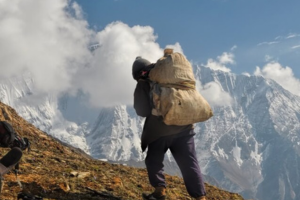
No, your luggage will be carried by a porter. He carries a maximum of 18 kg of luggage for every two hikers. You’ll only be carrying a small daypack containing water, snacks, an extra layer of clothing and your camera. This makes the walks lighter and more enjoyable.
-
How many hours do we walk per day?
On average, you’ll be walking for 4 to 6 hours a day. There’s plenty of time to rest, take photos and enjoy the scenery.
-
What should I bring on this trek?
A detailed packing list will be provided upon booking, but please ensure you bring sturdy walking boots, layered clothing (for both warm and cold weather), rainwear, sun protection and a day rucksack. A warm sleeping bag is recommended, particularly outside the peak season.
-
Can I expect electricity and Wi-Fi on the way?
Most lodges have (limited) electricity, for example to charge your phone or camera. Wi-Fi is sometimes available for a fee, but it isn’t always reliable. It’s therefore a good idea to be prepared to go offline.
-
What if I don't feel well during the trek?
The guide is experienced and trained in first aid and the recognition of altitude sickness. In an emergency, immediate action will be taken and, if necessary, a rapid descent or transport can be arranged. The route is safe and there are several escape routes along the way. Please ensure you have adequate travel insurance that also covers air ambulance and helicopter rescue.
-
What happens if my flight is delayed or cancelled?
We are monitoring the situation closely and, in the event of a delay or cancellation, will look for an alternative: a later flight, a rebooking to the next day, or a trip to another region. We can also arrange a helicopter flight for you (at an additional cost). We ensure that your journey continues as smoothly as possible.

english version
english version
Excited about Nepal?
Lorem ipsum dolor sit amet, consetetur sadip scing elitr, sed diam nonumy eirmod tempor invidunt ut labore et dolore magna. Lorem ipsum dolor sit amet, consetetur sadip scing elitr.
View our trips Travel proposal